Timeless Principles
There are many operational excellence models that have come and gone; one of the best is the Shingo model.
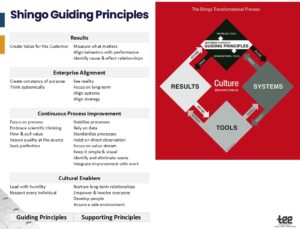
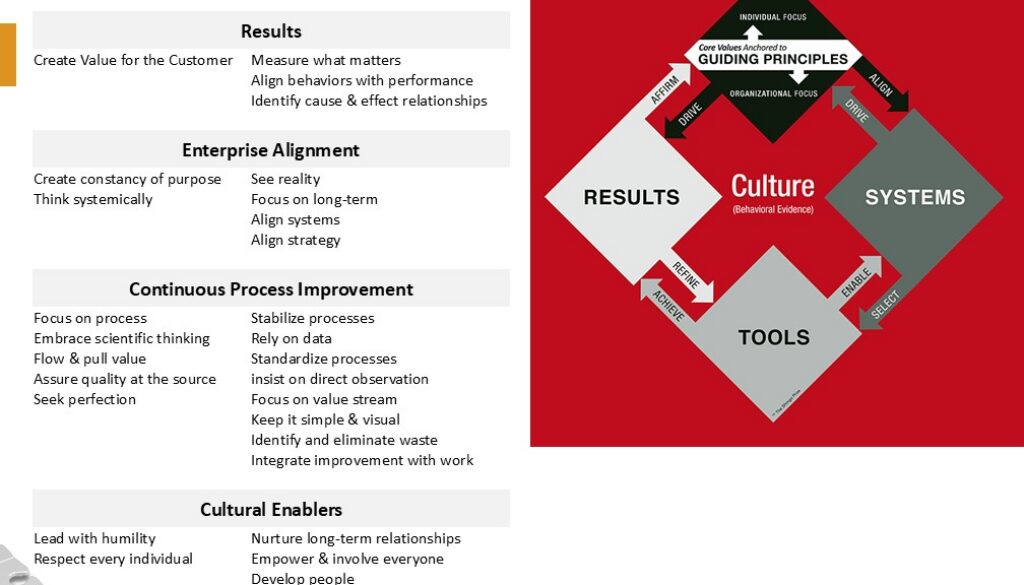
While tgg doesn’t typically recommend clients pursue the formal prize and certification, we routinely suggest they read about the model and the guiding and secondary principles.
One of the easiest ways to describe the principles is to describe what they are not. Many young business managers push for results having little to no understanding of how to define a process, and potentially even less understanding of how to positively improve the culture. They possess the ‘whatever it takes’ mentality and the Hawthorne effect shows itself in force over and over again. If you survey their work, little to none of the principles below are included and the results are short-lived.
On the other hand, someone that is trained and experienced will start with a simple tool such as SIPOC. As we begin to understand what the process is (and it doesn’t matter what industry or which process) we can rapidly identify where more reliable measurement is needed to quantify the inefficiency. Moving through developing a solution we lean heavily on the principles.
- Measure what matters.
- Align systems (and software).
- Keep it simple and visual.
- Empower and involve everyone.
Change is good. More change is better. As these principles are adhered, all employees want to get involved and the result is quite a lot of fun. Easier, faster, safer, better, cheaper.
Reach out to tgg and we can explain more about how these principles are involved with everything that we do.