What is the Direction of Your Senior Leadership Team?
The Disconnect Between Planning and Execution
You’ve spent weeks developing your strategic plan. The Board is aligned. Your leadership team knows the goals. The senior leadership alignment is complete, right?
But when you walk the floor or review last month’s numbers, you see a different story. True senior leadership alignment requires more than alignment at the top – it demands systems that connect strategy to daily execution.
Projects drag on without clear ownership. Teams work hard but on the wrong priorities. By quarter’s end, you’re explaining why targets were missed—again.
Sound familiar?
The gap between strategy and execution isn’t a people problem. It’s a process problem. And it’s costing you more than missed targets—it’s costing you market share, competitive advantage, and the trust of your stakeholders.
Why Most Companies Struggle with Senior Leadership Alignment
Here’s what we see when we walk into most organizations: strategic goals live in PowerPoint presentations while daily work happens in a completely different universe. The common failure modes:
- Your executive team sets annual objectives, but supervisors don’t know how their team’s daily work connects to those goals.
- Problems that happen on Monday’s first shift aren’t escalated until Friday’s staff meeting—when it’s too late to course-correct.
- Managers explain what happened instead of intervening while it’s happening.
According to David Mann, author of “Creating a Lean Culture,” this disconnect happens because most organizations lack a structured way to cascade strategy down and escalate problems up. Without this structure, you’re managing by results instead of managing the process that creates results.
| Process is: | Result is: | Policy Deployment says: | MBR says: |
|---|---|---|---|
| Bad | Bad | Bad | Bad |
| Bad | Good | Bad | Good |
| Good | Bad | Can’t Happen? | Bad |
| Good | Good | Good | Good |
(MBR) or “Management by results,” means getting results no matter what it takes. Because the results aren’t based on written process control and auditing, these results are short lived and will only represent a “Hawthorne effect.”
The Missing Link: Daily Management
Think about a football game. The coach doesn’t wait until the game ends to check the score. The team huddles between plays, calls timeouts to adjust strategy, and regroups at halftime to plan for the second half.
That’s daily management—and it’s what separates companies that execute from companies that explain.
Daily management has three critical components:
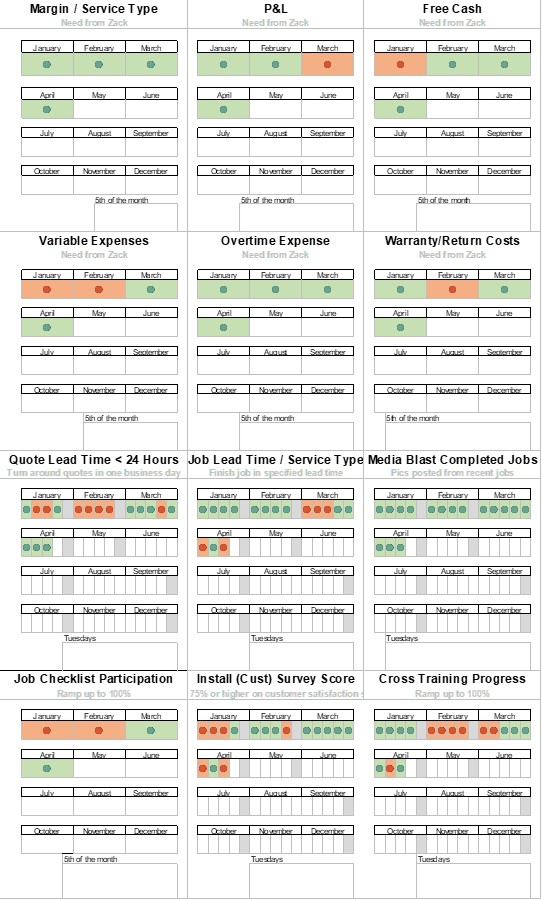
First, it identifies process abnormalities the moment they occur through visual management systems that show actual performance versus planned performance. Hour-by-hour tracking reveals problems while you still have time to fix them.
Second, it engages countermeasures immediately by determining what process control failed and implementing solutions during the same shift—not weeks later in a conference room.
Third, it uses tiered meetings to properly escalate problems up the organization and provide feedback back down, ensuring the right people are addressing the right issues at the right level.
Vital Aspects You Need to Track
Your daily management system should focus on these four elements:
- standard top visual signals that instantly show whether you’re winning or losing,
- actual-to-planned tracking (in many cases, hour-by-hour),
- frequency of how often flow interrupters occur, and
- countermeasures with clear PDCA (Plan-Do-Check-Adjust) action plans.
When we implement this with clients, we consistently see response times cut in half and defects reduced by 50% or more. Why? Because bad information travels fast—up the organization—while teams still have time to act.
Policy Deployment: Your Strategic Roadmap
Now here’s where it gets powerful. Daily management tells you what’s happening today. Policy deployment ensures that “today” is moving you toward your long-term objectives.
Policy deployment—sometimes called Hoshin Kanri—answers five critical questions: What are we trying to achieve? Why does it matter? How will we get there? How much improvement do we need? Who is accountable?
Here’s what makes it work:
Every department aligns their resources to corporate goals instead of working in silos. Your metrics cascade down from executive objectives to department KPIs to individual actions. Everyone sees how their work contributes to the larger strategy.
We use a tool called the X-Matrix to map this out. It creates visual alignment between your 3-5 year breakthrough objectives, your annual improvement priorities, your annual improvement projects, and your process metrics. Each element connects to show exactly how daily activities support strategic goals.
The power isn’t in the tool—it’s in the conversation it creates. When your plant manager can trace a specific manufacturing improvement project back to your strategic goal of increasing market share, you’ve achieved true alignment.
Creating Accountability Without Blame
Let’s address the elephant in the room. Many executives worry that daily tracking creates a “gotcha” culture where people hide problems instead of surfacing them.
The opposite is true—when implemented correctly.
Your organizational maturity shows in how fast bad information travels up. In healthy organizations, failures become opportunities to improve because everyone understands that the focus is on fixing the process, not fixing blame.
The protocol that makes this work:
Start meetings on time with updated metrics already posted. No sidebar conversations—stay focused.
Encourage two-way communication where frontline employees contribute solutions. When abnormalities occur, ask “What process control failed?” instead of “Who messed up?” Make attendance mandatory and never cancel these meetings for other priorities.
This shift from accountability-as-blame to accountability-as-ownership transforms your culture. Employees become problem-solvers instead of problem-hiders. And your executive team gets early warning signals instead of post-mortem reports.
Key Takeaways
The disconnect between strategic priorities and daily execution is killing your quarterly performance—but it doesn’t have to.
Daily management systems create real-time visibility into process abnormalities and enable immediate countermeasures while you still have time to course-correct. Policy deployment ensures every improvement project and daily activity connects to your long-term strategic objectives. Tiered meeting structures escalate problems up and cascade strategy down, creating alignment across your entire organization.
The question isn’t whether you can afford to implement these systems. The question is whether you can afford to keep explaining missed targets to your Board, your investors, or your PE sponsors.
Companies that master this don’t just execute their strategy—they accelerate it. They reduce response times to customers by 50%. They cut defects and waste in half. They turn every employee into a problem-solver instead of a problem-reporter.
If your current quarterly priorities aren’t visibly connected to your long-term strategy, you don’t have an execution problem. You have a system problem. And that’s actually good news—because systems can be fixed.
Ready to see where your organizational log jams are? At The Guthrie Group, we help companies identify what’s preventing alignment between strategy and execution. Our one-day assessment can show you exactly where the disconnects exist and what it’s costing you. Learn more at guthriegroup.com.
Example Images
-
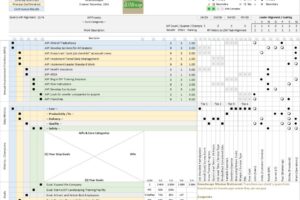
- Example X Matrix

-
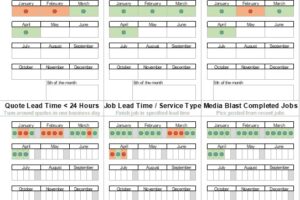
- Example Tier 1 - 4 DM